
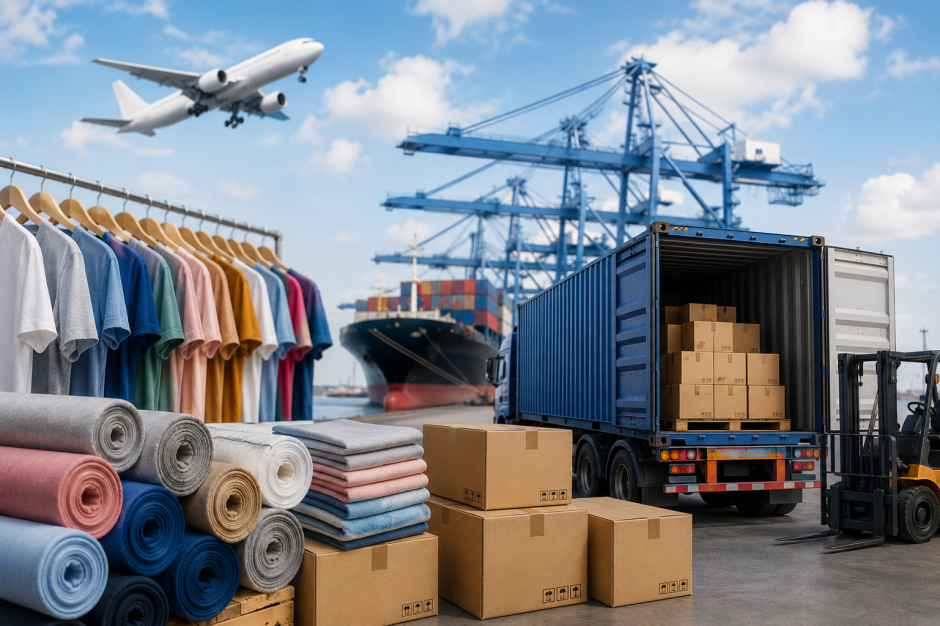
The textile and garment industry is one of the most dynamic sectors in global trade, relying heavily on efficient logistics and transportation services. Every day, large volumes of fabrics, raw materials, apparel, footwear, and textile products are transported across international markets to meet growing consumer demand.
Successful transportation of textile products requires careful planning, secure packaging, and reliable logistics management. Textile goods are often sensitive to moisture, dust, temperature fluctuations, and physical damage, making professional transportation solutions essential for maintaining product quality throughout the supply chain.
Modern textile logistics involves various transportation methods, including road, sea, air, and multimodal freight services. Road transportation provides flexible door-to-door delivery solutions, while sea freight remains the most cost-effective option for large-volume shipments from major manufacturing countries such as China, India, Bangladesh, and Vietnam. Air freight is preferred for urgent deliveries and high-value fashion products that require fast transit times.
Proper warehousing is equally important in textile logistics. Climate-controlled storage facilities help protect fabrics and garments from environmental factors, ensuring products remain in optimal condition before distribution.
As the global fashion and textile market continues to expand, businesses increasingly rely on experienced logistics partners to optimize transportation costs, improve delivery times, manage customs procedures, and ensure secure cargo handling. Efficient logistics not only supports uninterrupted supply chains but also creates a significant competitive advantage in international markets.
For textile manufacturers, importers, exporters, and retailers, professional transportation services play a critical role in ensuring products reach their destinations safely, efficiently, and on schedule.
