
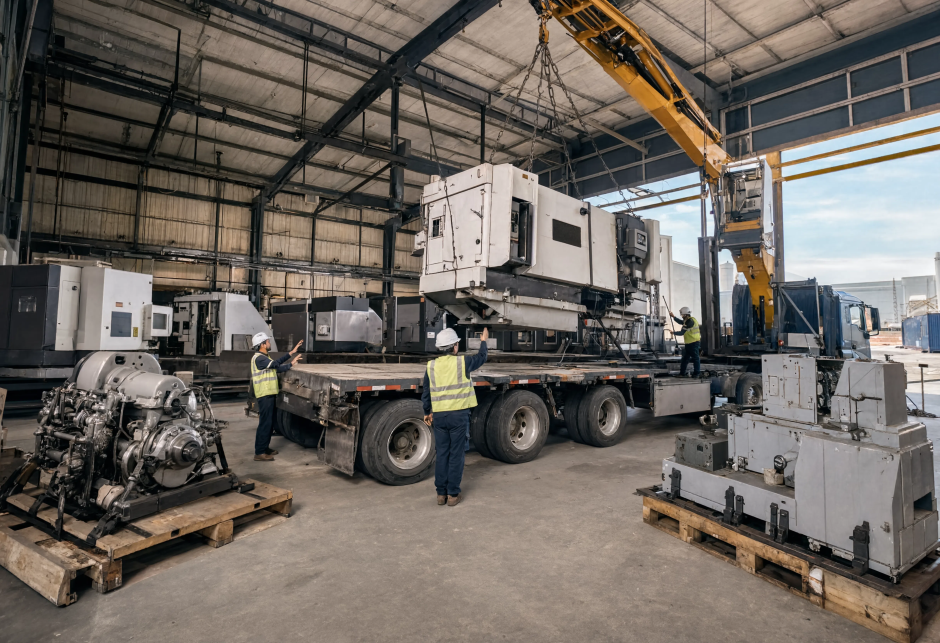
Machinery and Industrial Equipment Transportation
Transportation of machinery and industrial equipment is one of the most complex and responsible sectors in logistics. Even a small mistake can lead to financial losses, production delays, or equipment damage.
Industrial machinery is often heavy, oversized, and extremely valuable, requiring a professional approach from planning to final delivery.
1. What Industrial Equipment Transportation Includes
Industrial cargo transportation covers a wide range of heavy-duty equipment such as:
- production lines and manufacturing machines
- CNC machines
- metal processing equipment
- energy systems
- factory assemblies
These shipments require engineering calculations, special handling, and secure fastening systems.
2. Importance of Proper Planning
Successful transportation starts with detailed planning, including:
- cargo weight and dimensions
- route limitations
- road conditions
- loading/unloading capabilities
Without proper planning, risks increase significantly.
3. Specialized Equipment Usage
Heavy machinery transport requires specialized tools such as:
- hydraulic platforms
- cranes
- low-bed trucks
- modular transport systems
These ensure safe handling of oversized cargo.
4. Packaging and Protection
Proper packaging is crucial for protecting expensive machinery:
- anti-vibration bases
- metal frames
- protective foams
- moisture-resistant materials
Incorrect packaging may damage sensitive components.
5. International Transportation
Many industrial machines are imported or exported globally, requiring:
- customs clearance
- international documentation
- Incoterms compliance
- cargo insurance
Experienced logistics providers help reduce risks and delays.
6. Insurance Importance
Insurance is essential due to high cargo value:
- financial protection
- compensation in case of damage
- risk reduction
7. Common Challenges
- oversized dimensions
- route restrictions
- border delays
- loading complexity
Proper expertise helps overcome these challenges.
8. Choosing the Right Logistics Partner
When selecting a logistics company, consider:
- experience in industrial cargo
- technical capabilities
- international network
- insurance coverage
- client reviews
Machinery and industrial equipment transportation requires expertise, planning, and precision. Working with experienced logistics providers ensures safe, efficient, and reliable delivery of high-value industrial cargo.
