
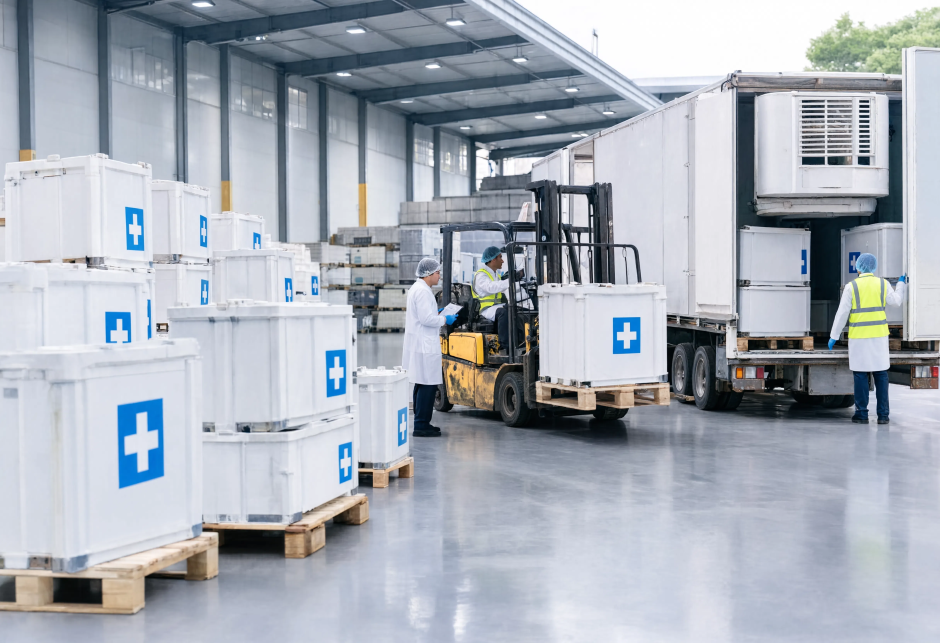
Pharmaceutical and Medical Equipment Logistics: Precision, Safety, and Responsibility
Pharmaceutical products and medical equipment are among the most sensitive and high-responsibility cargo types. Their transportation requires strict compliance with international standards, specialized handling, and controlled environmental conditions.
Even minor errors can lead to financial losses and impact human health, making logistics in this sector highly specialized.
Why Pharmaceutical Logistics Is Unique
Pharmaceutical goods are extremely sensitive to environmental conditions. Temperature, humidity, and transit time directly affect product quality.
Key requirements include:
- Temperature control (2°C–8°C or 15°C–25°C)
- Specialized protective packaging
- Fast and accurate delivery
- Real-time tracking systems
Medical Equipment Transportation Challenges
Medical equipment often includes high-value and complex systems such as:
- laboratory devices
- surgical instruments
- diagnostic machines (MRI, CT)
- hospital-wide systems
Key requirements:
- shock-resistant packaging
- professional cargo securing
- specialized transport vehicles
- proper customs documentation
Solutions for Large-Scale Shipments
The logistics process includes several key stages:
1. Planning
Detailed analysis of cargo type, route, and delivery timeline.
2. Packaging
Use of thermal insulation and protective materials.
3. Transportation
Air, road, or multimodal logistics solutions depending on urgency.
4. Monitoring
Real-time GPS and temperature tracking throughout the journey.
International Standards
Pharmaceutical logistics is governed by GDP and ISO standards, ensuring:
- product safety
- quality preservation
- supply chain transparency
- risk reduction
Risk Management
Key risks include:
- temperature deviations
- delivery delays
- equipment damage
- documentation errors
These are minimized through monitoring systems, insurance coverage, and strict quality control procedures.
Pharmaceutical and medical logistics requires precision, advanced technology, and strict compliance with international standards. A reliable logistics partner ensures safety, efficiency, and quality throughout the entire supply chain.
