
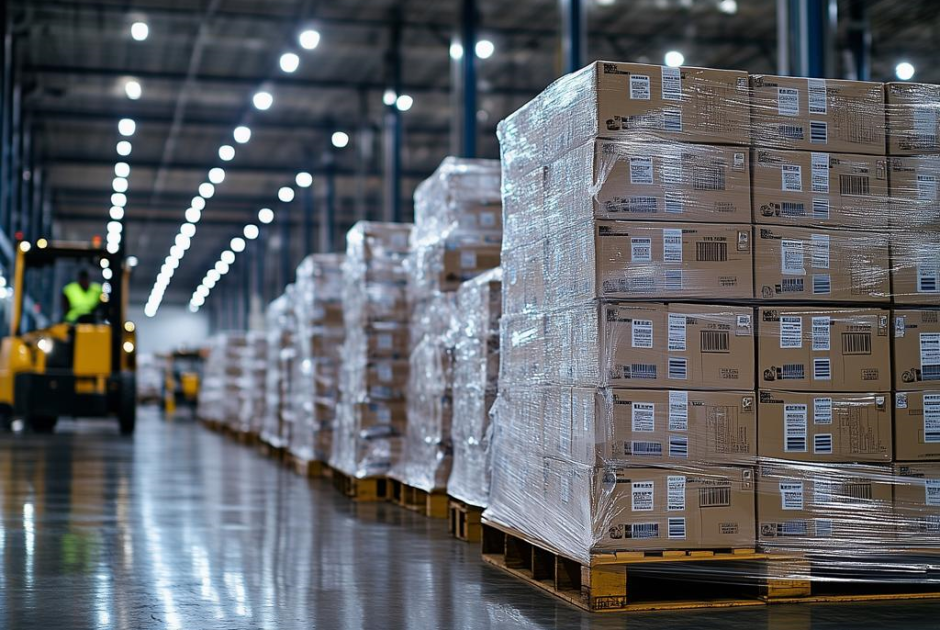
For businesses importing products from China, efficient logistics management is just as important as finding reliable suppliers. Many companies purchase goods from several factories or wholesalers to secure competitive prices, diversify their product range, and meet different business requirements.
However, arranging separate shipments from each supplier can increase transportation expenses, complicate shipment tracking, and make the import process more difficult to manage.
One practical solution is cargo consolidation: collecting goods from multiple suppliers at a single warehouse and combining them into one shipment for international transportation.
When properly organized, consolidation can help businesses use container or truck capacity more efficiently, reduce the need for separate shipments, and improve supply chain coordination.
But how does cargo consolidation work? What role does a consolidation warehouse play, and when can combining shipments reduce the overall cost of importing goods from China to Armenia?
What Is Cargo Consolidation?
Cargo consolidation is a logistics process in which goods purchased from different suppliers are delivered to one designated warehouse, registered, checked, and prepared for combined transportation.
For example, an Armenian importer may purchase lighting equipment from one Chinese factory, furniture accessories from another, and electrical products from a third. If every supplier ships its goods independently, the importer may need to arrange and pay for several separate transportation services.
With cargo consolidation, each supplier sends the goods to a designated warehouse in China. Once the products arrive, they are registered and identified according to the supplier and purchase order. The shipments are then combined into one consolidated cargo batch.
The resulting shipment can travel to Armenia as one organized consignment, provided that the goods are compatible with the selected transportation method and meet the relevant documentation and customs requirements.
Consolidation does not require all products to be identical or purchased from the same manufacturer. Different product categories may be shipped together when their packaging, handling, and transportation requirements allow it.
Why Should Businesses Consolidate Shipments from Multiple Suppliers?
Combining shipments can offer several operational and financial advantages for businesses importing goods from China.
1. Optimize Transportation Costs
Every separate shipment may involve its own transportation arrangements, handling procedures, and administrative expenses. Consolidation can make better use of available truck or container capacity.
For example, a company purchasing goods from three factories may otherwise need to arrange three separate deliveries. Depending on the shipment sizes and pricing structure, combining these orders may reduce repeated transportation costs and lower the freight cost per unit.
However, transportation is only one part of the total cost. Businesses should also account for local deliveries to the warehouse, receiving fees, storage, cargo handling, repacking, and other applicable charges.
Consolidation is not automatically cheaper in every situation. The actual savings depend on the shipment’s volume, weight, schedule, route, and warehouse costs.
2. Simplify Supply Chain Management
Managing several suppliers at the same time requires careful coordination of production schedules, order quantities, packaging, and shipping documents.
A consolidation warehouse acts as a central collection point for incoming goods. This makes it easier to track which orders have arrived, identify missing packages, and determine whether the planned shipment is ready for dispatch.
For businesses that regularly purchase from multiple Chinese manufacturers, a coordinated consolidation process can make import planning more structured and predictable.
3. Use Available Cargo Space More Efficiently
International freight costs may depend on cargo weight, dimensions, volume, route, and transportation method.
When goods from different suppliers are consolidated, businesses may be able to use available cargo space more efficiently rather than paying for several partially filled shipments.
This can be particularly useful for importers purchasing smaller quantities from different manufacturers.
Nevertheless, cargo must be arranged according to weight distribution, dimensions, fragility, packaging requirements, and transportation safety rules. Filling a container or truck is not enough; the cargo must also be loaded correctly.
4. Improve Shipment Visibility and Control
When goods are shipped separately, each order may have a different tracking process and arrival date. Consolidation creates an opportunity to manage incoming goods through a single warehouse operation.
Each package should be properly identified, recorded, and matched with the relevant supplier and purchase order. Businesses can then check whether all expected goods have arrived before the consolidated shipment is dispatched.
This process can help identify discrepancies earlier and improve communication between suppliers, warehouse operators, and logistics providers.
However, consolidation does not eliminate every risk of delay. Late production, warehouse congestion, or documentation issues can still affect the departure date.
How Does the Cargo Consolidation Process Work?
Cargo consolidation generally involves five main stages.
Step 1: Plan purchases and supplier schedules.
The importer identifies the suppliers, products, quantities, package dimensions, and expected completion dates. Each supplier receives the designated warehouse details and the required cargo labeling instructions.
Step 2: Deliver goods to the consolidation warehouse.
Each supplier arranges transportation of its products to the agreed warehouse in China. The warehouse should be informed in advance about the expected deliveries so that incoming goods can be identified correctly.
Step 3: Receive and inspect the cargo.
Warehouse personnel record the number of packages, check labels, and examine the external condition of the goods. Depending on the agreed service, they may also measure the cargo, take photographs, or arrange additional packaging.
Step 4: Consolidate the shipments.
Once the planned orders have arrived, the goods are registered and arranged for combined transportation. The loading plan considers cargo dimensions, weight, compatibility, and safety requirements.
Step 5: Arrange international transportation to Armenia.
The required transportation and customs documentation is prepared, an appropriate route is selected, and the consolidated cargo is dispatched to Armenia. Customs clearance must follow the applicable requirements for the goods and the importer.
If one supplier is late, the entire consolidation schedule may be affected. For this reason, coordinating supplier deadlines in advance is an important part of the process.
What Is the Role of a Consolidation Warehouse?
A consolidation warehouse is more than a temporary storage facility. It is an important link between suppliers and international transportation.
Its key functions may include:
-
Receiving and registering cargo: Recording incoming packages and their identifying information.
-
Order identification: Matching goods to the correct supplier and purchase order.
-
Quantity and condition checks: Recording the number of packages and checking their external condition.
-
Cargo measurement: Establishing dimensions, volume, and weight for transportation planning.
-
Storage management: Keeping goods until the planned shipment is ready.
-
Packaging support: Arranging additional protective packaging when required and agreed upon.
-
Shipment preparation: Organizing the cargo for loading and dispatch.
Before using a warehouse, businesses should clarify which services are included in the rate. These may include receiving confirmation, package measurements, photographs, storage allowances, and additional packaging.
It is also important to understand the warehouse’s operating procedures, storage fees, and responsibilities in the event of discrepancies or damage.
Which Shipping Method Is Best for Consolidated Cargo?
The most suitable transportation method depends on the shipment’s size, urgency, budget, destination, and cargo characteristics.
| Shipping method | Best suited for |
|---|---|
| Sea freight | Larger shipments when transportation cost optimization is a priority |
| Road freight | Cargo moving along suitable land routes with relevant transit requirements |
| Air freight | Urgent or high-value goods when speed is a priority |
| LCL — Less than Container Load | Shipments that do not require an entire shipping container |
| FCL — Full Container Load | Shipments that justify using a dedicated full container |
Cargo consolidation should not be confused with LCL or FCL. Consolidation is the process of collecting and combining goods from multiple suppliers. LCL and FCL describe different ways of arranging sea container transportation.
After consolidation, goods may be shipped as LCL or, when the volume and business requirements justify it, in a full container under FCL terms.
To make the right decision, compare the total logistics cost rather than looking only at the main freight rate. Warehouse handling, storage, documentation, and other applicable charges can significantly affect the final price.
How Can Businesses Reduce Shipping Costs from China?
Consolidation can help optimize logistics expenses, but the outcome depends on how well the shipment is planned.
1. Coordinate supplier completion dates.
If one order is ready well before the others, it may need to remain in storage. Coordinating production and delivery schedules can reduce waiting time and additional storage expenses.
2. Obtain accurate cargo measurements.
Before requesting a quotation, collect the number of packages, dimensions, total volume, and gross weight. These details help logistics providers calculate transportation costs more accurately.
3. Optimize packaging.
Oversized packaging can occupy unnecessary cargo space. Where product protection allows, discuss more efficient packaging with suppliers. Never compromise product safety simply to reduce volume.
4. Check warehouse storage terms.
Confirm how many storage days are included, when additional fees begin, and whether charges apply separately to each supplier’s shipment.
5. Compare the total landed logistics cost.
Include local transportation in China, warehouse handling, storage, international freight, documentation, customs-related expenses, and delivery within Armenia where applicable.
6. Prepare documentation in advance.
Product descriptions, quantities, declared values, and supplier information must accurately reflect the goods and meet applicable customs requirements. Errors can cause delays and additional expenses.
7. Select the appropriate shipping method.
Urgent goods may justify faster transportation, while larger non-urgent shipments may benefit from more economical options. In some cases, sending certain goods separately can be more cost-effective than delaying an entire shipment while waiting for every supplier.
How Can You Calculate Whether Consolidation Is Worthwhile?
The best way to evaluate consolidation is to compare two scenarios: shipping each supplier’s goods separately and combining all eligible goods into one shipment.
The total cost of a consolidated shipment may include:
-
Local transportation from each supplier to the warehouse.
-
Warehouse receiving and handling fees.
-
Storage and additional packaging.
-
International freight charges.
-
Documentation and applicable customs-related expenses.
-
Final delivery to the destination.
-
Any additional service fees.
Compare the total against the combined cost of separate shipments, using the same products, quantities, destination, and comparable service scope.
For example, combining three supplier orders may reduce repeated transportation costs but introduce warehouse handling and storage fees. The actual financial benefit depends on the difference between these costs.
A reliable comparison should therefore be based on a complete quotation rather than the assumption that one shipment is always cheaper than several smaller ones.
What Risks Should Businesses Consider?
Although consolidation can improve logistics efficiency, several risks should be managed carefully.
-
Supplier delays: One late order can postpone the dispatch of the consolidated shipment.
-
Incorrect labeling: Poor identification may cause packages from different orders to be mixed up.
-
Cargo damage: Improper loading or incompatible packaging may damage fragile products.
-
Documentation discrepancies: Shipment information must accurately reflect the goods being transported.
-
Additional storage fees: Waiting too long for outstanding orders can reduce the financial benefits of consolidation.
To minimize these risks, establish clear receiving procedures, agree on storage conditions, confirm documentation requirements, and coordinate supplier schedules before the shipment begins.
Which Businesses Benefit Most from Cargo Consolidation?
Cargo consolidation can be particularly useful for companies purchasing goods from several manufacturers and importing them into Armenia.
Typical examples include:
-
Furniture and interior product importers.
-
Lighting and electrical equipment suppliers.
-
Building materials and finishing product distributors.
-
Wholesale and retail businesses.
-
Manufacturers purchasing components from different factories.
-
Companies importing commercial products and equipment.
For example, a lighting distributor might purchase fixtures from one supplier, electrical accessories from another, and installation components from a third. Consolidation can bring these purchases together into one coordinated logistics operation.
However, dangerous goods, temperature-sensitive products, and cargo with incompatible handling requirements may need separate arrangements. Always confirm compatibility before combining shipments.
How to Choose a Logistics Partner for Consolidation
Selecting the right logistics company involves more than comparing freight rates. Businesses should evaluate the provider’s ability to coordinate the entire process.
Before choosing a partner, ask:
-
Can the company organize cargo receiving and consolidation in China?
-
Does it provide information about incoming shipments, package measurements, and warehouse handling?
-
Is the full cost structure explained in advance?
-
Can the provider recommend suitable transportation options based on the cargo and required delivery schedule?
-
Does it help coordinate shipping documentation and dispatch?
-
Are estimated transit times, possible delays, and additional charges communicated clearly?
A reliable logistics partner helps businesses understand the full process, manage costs more effectively, and make informed decisions about their supply chain.
Combining goods from multiple Chinese suppliers into one shipment is a practical solution for businesses importing products into Armenia. Properly organized cargo consolidation can improve cargo space utilization, simplify shipment management, and potentially reduce logistics expenses.
The key is to coordinate supplier schedules, use an appropriate consolidation warehouse, verify cargo dimensions, prepare accurate documentation, and select a suitable transportation method.
The final result depends on the shipment’s volume, storage requirements, supplier readiness, route, and overall logistics costs.
Clever Logistics & Transport can help businesses explore shipping options from China to Armenia and discuss the logistics of consolidating goods from multiple suppliers. To evaluate a suitable solution, prepare the number of suppliers, estimated cargo weight and volume, and expected order completion dates.
