
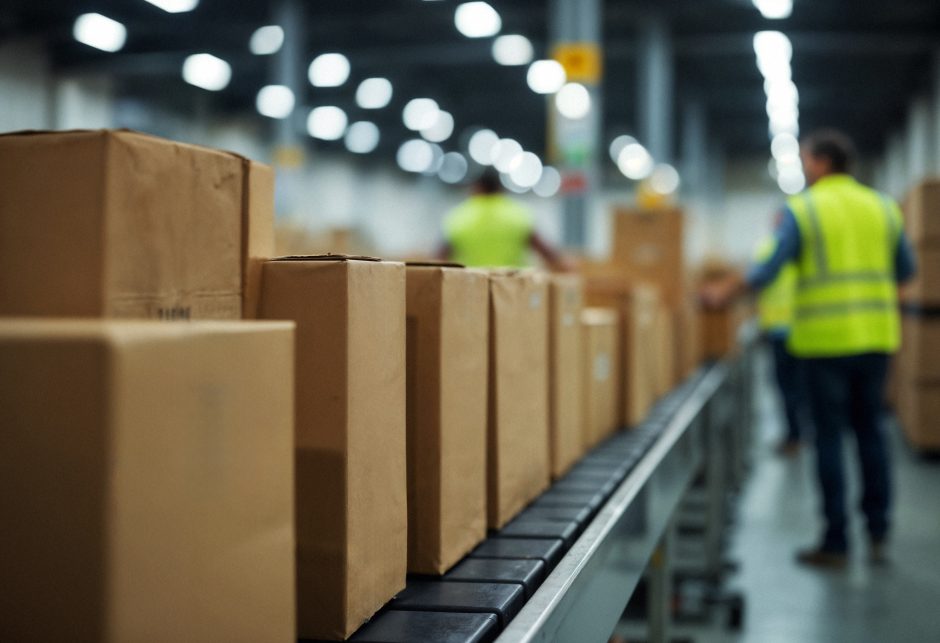
Importing goods from Europe has become an important part of the supply chain for many Armenian businesses. Construction materials, furniture, lighting systems, equipment, electronics, clothing, spare parts and many other products are transported from European countries to Armenia every day.
However, every shipment involves a certain level of risk. Cargo can be damaged during loading or unloading, exposed to external conditions during transportation, partially lost or completely lost. For high-value or fragile goods, even minor damage can result in significant financial losses.
This raises an important question: Does every shipment from Europe to Armenia need cargo insurance, or is freight insurance only necessary in specific situations?
The answer depends on several factors, including the value and type of cargo, transportation method, route, contractual terms and the level of financial risk the importer is willing to accept.
What Is Cargo Insurance?
Cargo insurance is a financial protection mechanism designed to compensate the cargo owner for covered losses or damage under the terms of an insurance policy.
It is important to understand that carrier liability and cargo insurance are not the same thing.
A freight carrier may have a certain level of liability for the goods it transports. However, this does not automatically mean that the importer will receive full compensation for every type of damage or loss.
Carrier liability may be limited by applicable international conventions, transportation conditions or contractual provisions.
Freight insurance, on the other hand, is specifically designed to provide financial protection for the cargo and the risks covered by the insurance policy.
Why Is Insurance Important for Shipments from Europe to Armenia?
A shipment from Europe to Armenia may pass through several countries, transportation hubs and handling points.
During the journey, cargo may be loaded and unloaded multiple times, transferred between vehicles or temporarily stored at logistics facilities.
Every additional stage creates potential exposure to risk.
For example:
- cargo can be damaged during loading,
- packaging can be damaged,
- products can break or crack,
- moisture can affect sensitive goods,
- road incidents can cause physical damage,
- cargo can be partially or completely lost,
- unexpected events can create additional transportation risks.
When the cargo is worth several thousand or tens of thousands of euros, the cost of insurance may be relatively small compared with the potential financial loss.
When Is Cargo Insurance Really Necessary?
1. When the Cargo Is High-Value
This is one of the clearest situations in which insurance should be considered.
If the value of a shipment is high, even a relatively unlikely incident can have a major financial impact.
For example, if a company imports equipment worth €30,000 from Europe to Armenia, serious damage could affect not only the value of the shipment but also the company’s operations and project schedule.
In such cases, cargo insurance can be an important risk-management tool rather than simply an additional expense.
2. When the Goods Are Fragile
Fragile products require particular attention during transportation.
These may include:
- glass products,
- lighting fixtures,
- decorative elements,
- ceramics,
- sanitary ware,
- mirrors,
- certain electronic devices,
- architectural and interior products.
Proper packaging significantly reduces risk, but it cannot eliminate every possible incident.
Insurance provides an additional layer of financial protection.
3. When the Route Is Long
Long-distance transportation usually involves more handling operations, vehicles and logistics points.
A shipment from Europe to Armenia may pass through several countries and logistics hubs before reaching its final destination.
The longer the route and the more handling stages involved, the more important it becomes to evaluate transportation risks in advance.
4. When Cargo Loss Could Disrupt a Business Project
Some goods are not imported simply for resale. They may be required for manufacturing, construction or a specific commercial project.
For example, a construction company may import a custom lighting system from Europe for a specific building.
If the shipment is damaged, the problem is not limited to the value of the goods. Additional consequences may include:
- project delays,
- additional labor costs,
- replacement orders,
- contractual issues,
- missed project deadlines.
In such cases, cargo insurance can help reduce the financial impact of an unexpected incident.
Which Types of Goods Should Be Insured?
There is no universal rule that applies to every shipment. However, insurance is generally more relevant for certain categories of cargo.
High-value equipment
Industrial, medical, technological and specialized equipment can be extremely expensive to replace.
Lighting systems
Large decorative or architectural lighting systems may contain multiple components. Damage to individual elements can affect the value and usability of the entire system.
Glass and ceramics
These products are physically more vulnerable to impact and handling during transportation.
Electronics
High-value electronics can be affected by mechanical damage, moisture and other external factors.
Custom-made products
Specially manufactured products can be particularly difficult to replace. If they were produced for a specific project, the consequences of their loss can be greater than their purchase price alone.
What Happens If You Do Not Insure Your Cargo?
Not having insurance does not mean that the cargo will necessarily be damaged or lost.
Many shipments arrive safely without any incident.
The important question, however, is not only the probability of an incident but also the potential financial impact.
For example, a company may decide to accept the risk of losing a €500 shipment.
The same approach may not make financial sense for a €50,000 shipment.
A simple principle can be applied:
The greater the potential financial loss, the more important risk protection becomes.
Does Cargo Insurance Cover Every Type of Damage?
No.
This is one of the most important points to understand before purchasing an insurance policy.
The importer should check:
- which risks are covered,
- which risks are excluded,
- how damage is defined,
- what documents are required for a claim,
- what cargo value is insured,
- whether a deductible applies,
- where the insurance coverage is valid.
For example, certain policies may exclude damage resulting from inadequate packaging, normal wear and tear or specific circumstances listed in the policy.
Therefore, simply having insurance is not enough. You need to understand what the insurance actually covers.
How Is the Insurance Coverage Amount Determined?
The insured amount is generally based on the declared value of the cargo, although the exact calculation depends on the insurance provider and policy conditions.
In some cases, transportation costs or other contractual components may also be taken into consideration.
Importers should clarify whether the policy covers only the value of the goods or also certain transportation-related costs.
What Should You Check Before Insuring a Shipment?
Coverage
First, determine exactly which risks are covered.
Route
Make sure the policy covers the entire transportation route, from the pickup point in Europe to the final destination in Armenia.
Packaging
Proper packaging is essential not only for preventing damage but also when submitting an insurance claim.
Documentation
Keep invoices, packing lists, transportation documents, photographs and other relevant documentation.
Damage Reporting
If damage is visible when the cargo is received, document it immediately and follow the procedure specified by the carrier or insurance provider.
How Can You Reduce Cargo Damage Risks?
Insurance is only one part of effective risk management.
A properly organized logistics process is equally important.
To reduce the risk of cargo damage, businesses should focus on:
- high-quality packaging,
- proper cargo securing,
- choosing the appropriate transportation method,
- selecting a reliable logistics provider,
- accurate shipping documentation,
- photographing cargo before or during loading when appropriate,
- monitoring the transportation route and handling stages.
Together, these measures create a safer international freight transportation process.
Insurance or Simply Trusting the Carrier?
Trusting your logistics provider is important, but it does not eliminate the financial risk associated with your cargo.
A professional logistics company should not only organize shipping from Europe to Armenia, but also help the importer understand the potential risks associated with a particular shipment and whether additional protection may be appropriate.
For B2B imports, cargo should be viewed not simply as a physical product, but as a business investment.
Conclusion
Cargo insurance from Europe to Armenia is not necessarily required for every shipment, but it can be an important tool when the cargo is high-value, fragile, difficult to replace or critical to a business project.
The decision should not be based solely on the cost of insurance. Instead, businesses should consider the potential financial loss if something goes wrong.
For a €1,000 shipment of standard goods, a company may decide to accept the risk. For equipment, architectural lighting, specialized machinery or custom-made products worth €20,000–€50,000 or more, financial protection can be a much more reasonable decision.
Before arranging any shipping from Europe to Armenia, businesses should evaluate three key factors: the value of the cargo, the probability of damage or loss and the potential financial consequences.
Effective logistics is not only about competitive pricing and delivery speed. It is also about managing risks intelligently.
