
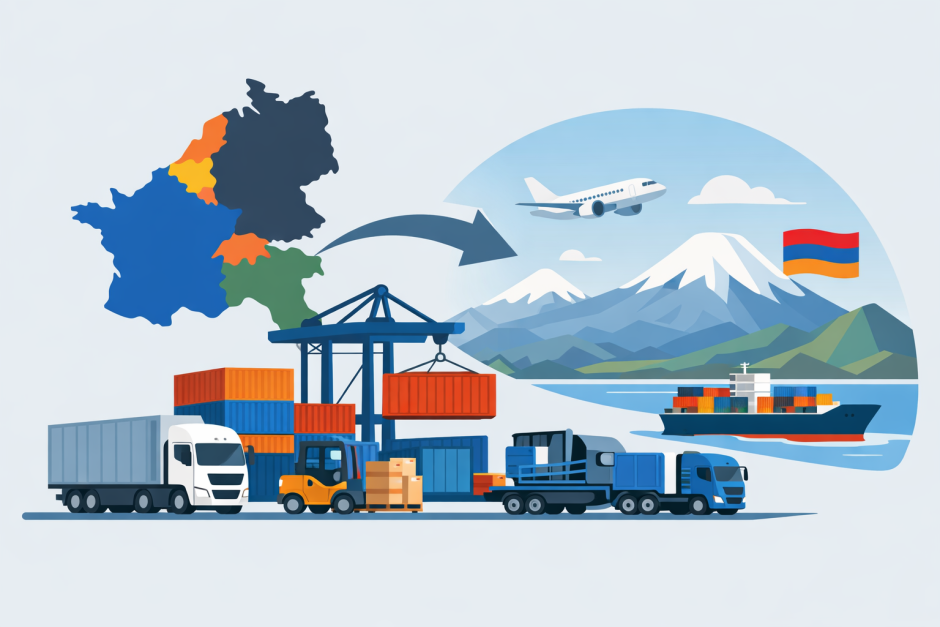
Cargo transportation from Europe to Armenia currently faces numerous challenges, particularly in the B2B sector. Companies importing industrial equipment, construction materials, or fast-moving consumer goods (FMCG) often experience delays that can result in significant financial losses. In this article, we will analyze which cargo types are most frequently delayed from Europe to Armenia, the reasons behind these delays, which European countries are most affected, and how businesses can minimize risks through careful planning and logistics management.
1. Industrial Equipment
Industrial equipment often experiences delays when transported from Europe to Armenia due to complex customs procedures, heavy load requirements, and unexpected logistical challenges.
-
Germany and Italy, as leading producers of industrial machinery, often have longer delivery times to Armenia because large cargoes require specialized containers and transport vehicles.
-
Shipments from France and Spain can also experience delays due to documentation processes and compliance with safety standards.
-
Many businesses also face operational challenges, such as needing technical support during transportation.
The solution requires logistics planning, pre-checking customs documents, and choosing transport methods suitable for the weight and dimensions of the equipment.
2. Construction Materials
Construction materials, such as cement, bricks, steel, and various building components, also frequently face delays.
-
The main causes are road and weather conditions. For example, trucks traveling from Hungary or Poland to Armenia often encounter delays at customs checkpoints, particularly during winter.
-
Large volumes require heavy-duty and specialized transport, which is not always readily available.
-
Seasonal demand also impacts logistics: during spring and summer construction peaks, delivery volumes rise sharply, affecting timelines.
It is advisable to pre-book transport vehicles and select shipping methods considering seasonal road conditions.
3. FMCG (Fast-Moving Consumer Goods)
FMCG products, such as food, beverages, personal care items, and small electronics, also experience delays, though for different reasons:
-
The diversity of products and constantly changing requirements increase the importance of accurate logistics planning.
-
Shipments from the Netherlands, Belgium, and Germany often encounter customs delays due to compliance requirements with Armenian import standards.
-
Delays frequently occur because of storage conditions; for instance, food items require strict temperature control, and even minor errors can lead to significant postponements.
Businesses can reduce delays by implementing pre-shipment storage in Europe and actively monitoring product conditions throughout the journey.
4. Country-Specific Logistics Insights
-
Germany – Major producer of industrial and technical equipment; delays often relate to cargo weight and customs inspections.
-
Italy – Major exporter of construction materials and electrical equipment; delays are often caused by cargo volume and transport complexity.
-
France – Key exporter of FMCG; delays frequently result from documentation processes.
-
Netherlands – Focused on containerized cargo; delays can occur due to customs or warehouse management.
-
Belgium – Frequently ships small, fast-moving goods; delays often relate to customs checks and transport logistics.
Delays from these countries to Armenia are influenced not only by material and volume factors but also by administrative, technical, and organizational issues.
5. Solutions to Logistics Challenges
B2B businesses can minimize delays through:
-
Advanced route planning, considering seasonality and road conditions.
-
Proper customs documentation to reduce clearance delays.
-
Choosing reliable carriers and implementing tracking systems to monitor cargo location and conditions.
-
Investing in external storage and supply chain optimization to prevent bottlenecks.
-
Prioritizing cargo to expedite delivery of critical shipments.
These approaches can help reduce delays for European-to-Armenia shipments, particularly for industrial equipment, construction materials, and FMCG products.
