
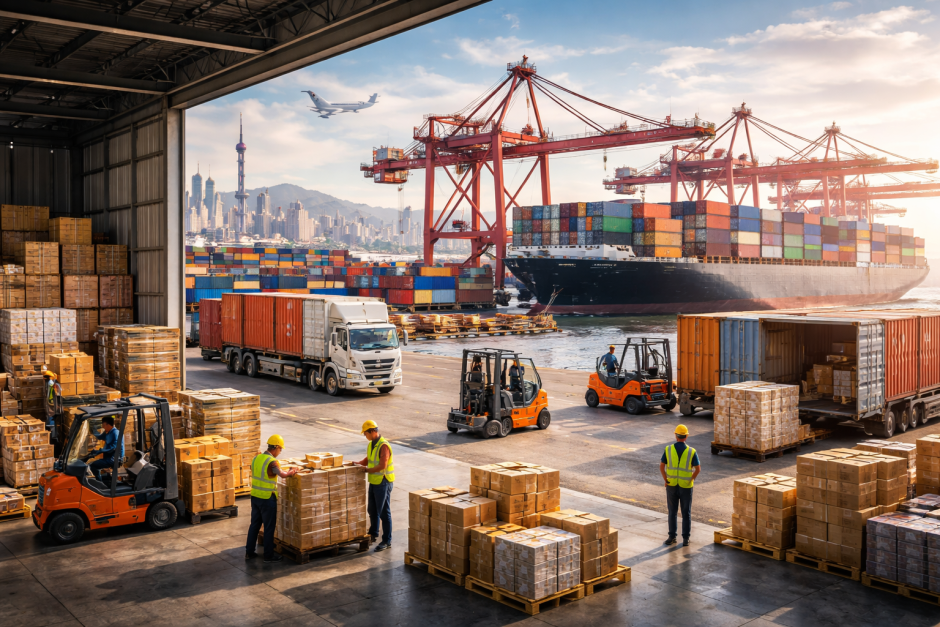
How LCL Cargo Consolidation Works in China
Using Shanghai, Qingdao, and Guangzhou Groupage Lines as an Example
China remains one of the world’s largest manufacturing and export hubs. Businesses across the globe import products from Chinese suppliers, but not every shipment is large enough to fill an entire container. In such cases, LCL shipping from China (Less than Container Load) becomes the most practical and cost-effective solution.
The LCL shipping model is based on cargo consolidation, where shipments from multiple customers are combined into a single container and transported to the same destination. This logistics method significantly reduces transportation costs and allows businesses to import smaller quantities of goods more frequently.
In this article, we will explain how cargo consolidation in China works, what stages shipments go through, and why major logistics hubs such as Shanghai, Qingdao, and Guangzhou play a key role in groupage shipping.
What Is LCL Shipping?
LCL shipping from China refers to freight transportation where the cargo does not fill an entire container. Instead, goods from different customers are combined in one container.
Each shipper pays only for the space their cargo occupies. This makes LCL shipments ideal for businesses that import smaller volumes of goods.
The main advantages of LCL shipping include:
-
lower transportation costs
-
the ability to ship smaller quantities
-
flexible supply chains
-
more frequent shipments
Because of these benefits, groupage shipping from China has become one of the most widely used logistics solutions in international trade.
What Is Cargo Consolidation?
Cargo consolidation in China is the process of collecting shipments from multiple suppliers at a consolidation warehouse before international transportation.
During consolidation, several steps take place:
-
receiving cargo at the warehouse
-
checking weight and dimensions
-
inspecting packaging
-
sorting cargo by destination
-
loading cargo into containers
The goal of consolidation is to maximize container space efficiency while ensuring safe transportation.
Shanghai — One of the World’s Largest Logistics Hubs
Shanghai is home to the largest container port in the world and serves as a key global trade gateway.
Many international shipments originate from this city, including:
-
electronics
-
household appliances
-
construction materials
-
automotive parts
-
industrial equipment
Having dedicated groupage lines in Shanghai allows logistics companies to quickly collect cargo from different suppliers and organize regular shipments to global destinations.
Qingdao — A Major Industrial Export Center
Qingdao is another important Chinese port, particularly for industrial exports from northern China.
Common goods exported from Qingdao include:
-
metal products
-
construction materials
-
machinery and equipment
-
industrial components
Through cargo consolidation in Qingdao, products from multiple manufacturers can be combined efficiently and shipped in a single container.
This process improves logistics efficiency and helps businesses reduce shipping costs.
Guangzhou — The Heart of Trade and Wholesale Markets
Guangzhou is one of China’s most active trading cities. It hosts thousands of manufacturers, wholesale markets, and international trade fairs.
Many businesses import goods from Guangzhou such as:
-
clothing and footwear
-
fashion accessories
-
lighting equipment
-
furniture
-
decorative materials
Because of the large number of suppliers in the region, LCL shipments from Guangzhou are extremely common. Consolidation warehouses in the area make it possible to gather shipments from multiple suppliers quickly and organize frequent international shipments.
The Journey of a Consolidated Shipment
When arranging freight shipping from China, cargo usually passes through several stages before reaching its destination.
The typical logistics chain looks like this:
Manufacturer → consolidation warehouse → container loading → port terminal → international transport → destination warehouse
Each stage requires careful coordination and experienced logistics management to ensure timely and secure delivery.
Cargo consolidation plays a crucial role in modern global logistics. By combining shipments from multiple businesses into one container, LCL shipping from China allows companies to reduce transportation costs and ship goods more efficiently.
Having dedicated groupage lines in major logistics hubs such as Shanghai, Qingdao, and Guangzhou ensures faster consolidation, regular shipping schedules, and greater control over the entire logistics process.
For businesses importing from China, this logistics model offers flexibility, efficiency, and a cost-effective way to manage international supply chains.
